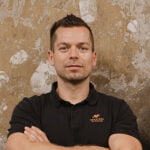
We also provide training after (sports) injuries. Post-rehabilitation at the Vitalis Centre is carried out with a qualified personal trainer.
Rehabilitation after an injury is a process that takes place in different phases.
Post-rehabilitation is the final step to help the individual/athlete return to his/her normal training. The full pathway usually includes: INJURY -> DIAGNOSIS -> TREATMENT/OPERATION -> PHYSIOTHERAPY -> POST-rehabilitation.
We work together and, based on the previous steps, the information gathered, the medical records, the consultation with the physiotherapist and the trainer, we ensure a good quality post-rehabilitation. This involves taking measurements on our TMG machines to check the condition of the muscles, then working with experts to design an appropriate training programme. We offer support and advice on post-rehabilitation conditioning training so that the athlete is ready to take on new challenges again.
A sports psychologist can also be involved after a consultation and assessment of the condition, as the fear of re-injury often remains after an injury and prevents the athlete from making a full return.
We take a holistic approach so you can come back even better. We are professional, friendly and supportive. And in our hands, you are safe and equipped for further success.
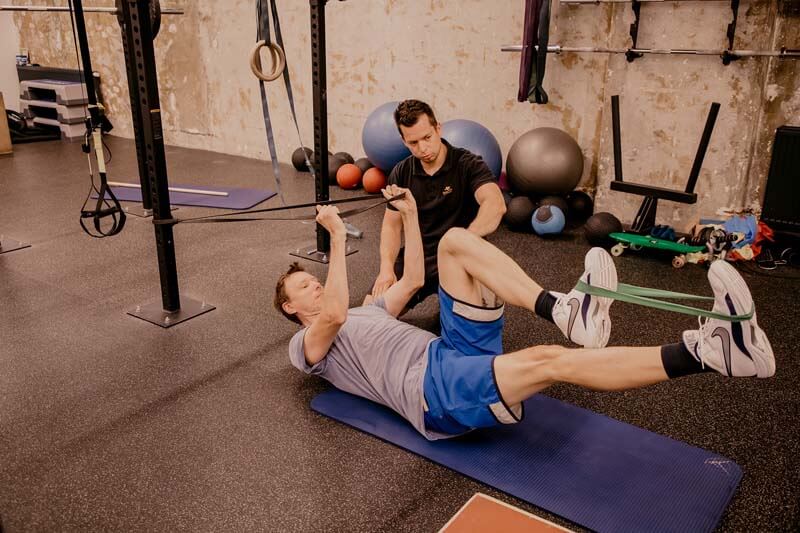
What is post-rehabilitation?
This is something that comes up for rehabilitation. Is this always the case, or does the healthcare system make sure it is? Do we take responsibility for taking this step ourselves, i.e. to get post-rehabilitation? Usually the answer to both questions is no.
Rehabilitation usually completes the healing process that starts when a person is injured. The doctor then orders surgical or conventional treatment, followed by physiotherapy sessions with a physiotherapist, and then the story ends because the individual is, in principle, ready to live independently again (we are referring here mainly to injuries such as: sprains, fractures, musculoskeletal tears, etc.). However, his/her condition may still be quite far from what it was before the unfortunate event.
Example
A ballet dancer has torn three of her four rotator cuff muscles. Her shoulder-arm has become quite useless for everyday situations, let alone for technically and aesthetically demanding ballet. Surgery, rest to allow the tendon to heal, then spa treatments and countless visits to the physiotherapist followed. Six months after the operation, her shoulder was stable and for normal conditions had a solid range of movement, but still far from the function required by dance. Her shoulder still lifted up when she was pronating and pre-dancing because she was unable to activate the “scapular muscles” strongly enough to hold her shoulder down, also due to the rotator cuff muscles still being too short and too weak. The shoulder was therefore fully functional for normal life, but not for the flawless aesthetic posture of ballet.
This is where post-rehabilitation comes in. Getting the individual, the recreational athlete, the sportsperson back on track before the injury. Not only that, but he or she must come back “stronger” so that the injury does not happen again.
We try to fill this gap, which occurs when a person leaves formal treatment, as well as possible. Come and take that vital step with us after rehabilitation so you can shine on your favourite dance floor again.